
There is a moment in a heavy guitar sound when more gain stops making the riff heavier. The pick attack gets soft, the low string turns into a blur, and the mix loses the space it needs for bass, kick drum and vocals. The most convincing death-metal tones are not simply distorted. They are arranged around impact, tension and contrast.
A small but important naming note: the Ampeg model documented in the sources for this story is the VH-140C. The often-repeated "VH-100C" is not the model listed in Ampeg's archived support material. Fleshrot is not an official Ampeg product; it is This Heavy Earth's own hardware/software collaboration with Aurora DSP, informed by the solid-state high-gain tradition that made the VH-140C such a persistent reference point.
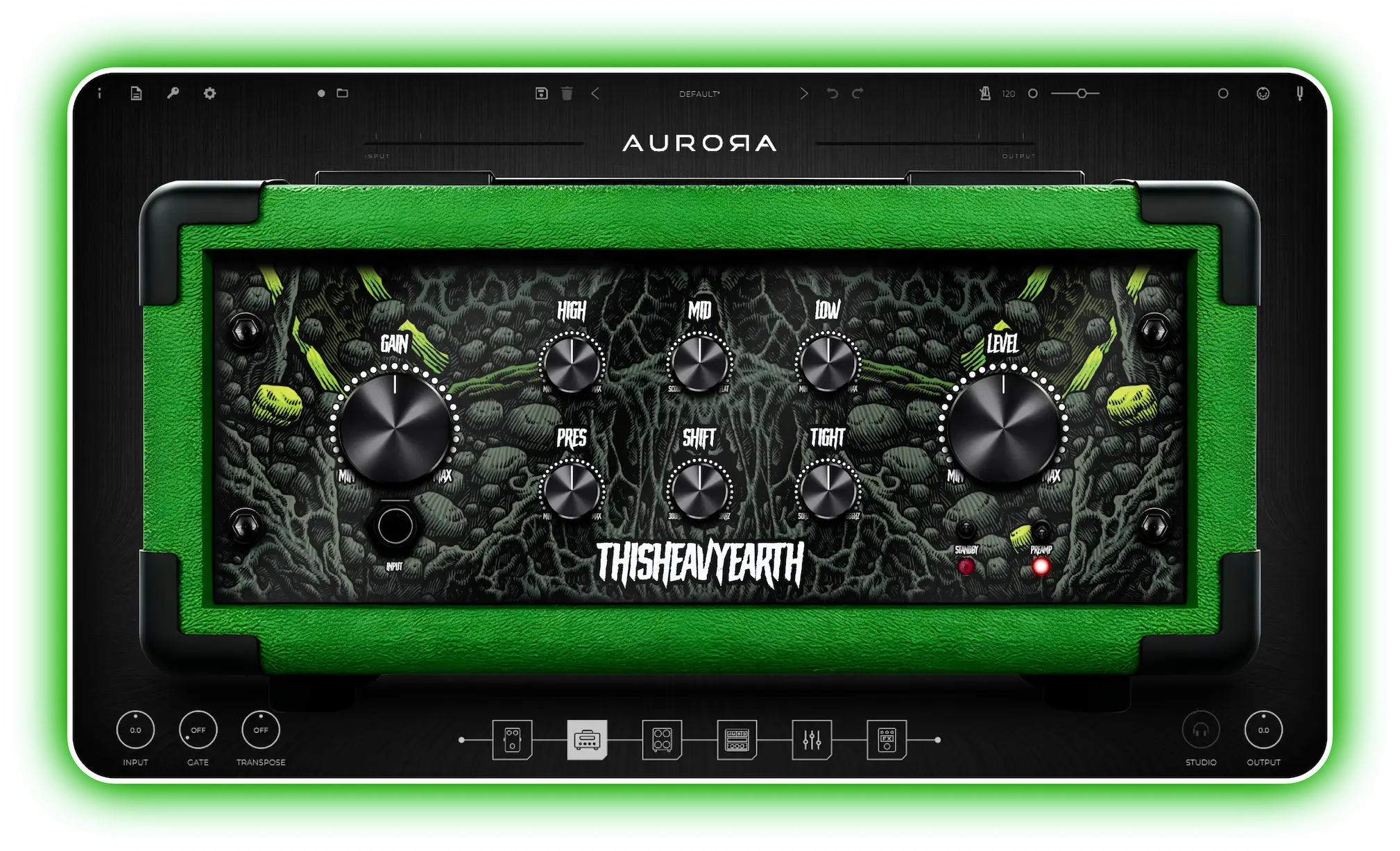
Fleshrot Suite: a complete heavy-guitar signal path built around the Fleshrot amplifier stage.
Death metal never had one guitar sound
When people say "old-school death metal tone," they can mean several very different things. One tradition is the Swedish chainsaw: a Boss HM-2 pushed hard into an amplifier, with a dense, abrasive midrange and a deliberately overdriven, almost mechanical edge. Another is the American strain of brutal, low-tuned guitar: a fast transient, a hard clipping texture, deep lows kept under control and enough space around the mids for the riff to remain legible.
Those sounds may share low tunings and extreme gain, but they do not solve the same musical problem. The chainsaw sound turns the entire guitar into a wall of texture. The VH-140C family is often sought for the opposite reason: it can make individual palm-muted hits, stops and harmonics feel unusually immediate. The tone is still ugly in the best possible way, but its ugliness has edges.
Swedish chainsaw
Dense, abrasive distortion with the pedal doing much of the voice shaping. The character is deliberately broad and noisy, which can be perfect for a wall of guitars.
VH-style brutality
Solid-state immediacy, hard clipping and a powerful mid-filter. The result can feel dry, aggressive and sharply defined under fast riffs.
Modern translation
The recorded sound still depends on tuning, strings, pick attack, cabinet response, editing, double-tracking and the relationship with the bass.
Why the VH-140C became a cult reference
Ampeg's reputation is usually associated with bass, but the VH-140C belongs to a different chapter: a high-powered solid-state guitar amplifier from the late 1980s/early 1990s era. Its appeal was not based on the familiar tube-amp story of sag, bloom and power-tube compression. The attraction was the opposite kind of behaviour: a direct response, a lot of headroom and a clipping structure that could stay aggressive when the guitar was tuned low.
The cult around the amplifier grew through player experience, used-gear circulation and repeated references from the death-metal and hardcore communities. It is frequently discussed alongside bands such as Suffocation, Gorguts and Dying Fetus. That list should be treated as scene context rather than a clean album-credit ledger: guitar rigs changed, sessions used different rooms and cabs, and internet gear lore tends to compress a whole recording chain into one memorable amplifier name.
That uncertainty does not make the circuit less interesting. It makes the better question more specific: what happens inside the drive channel that gives players this particular kind of violence?
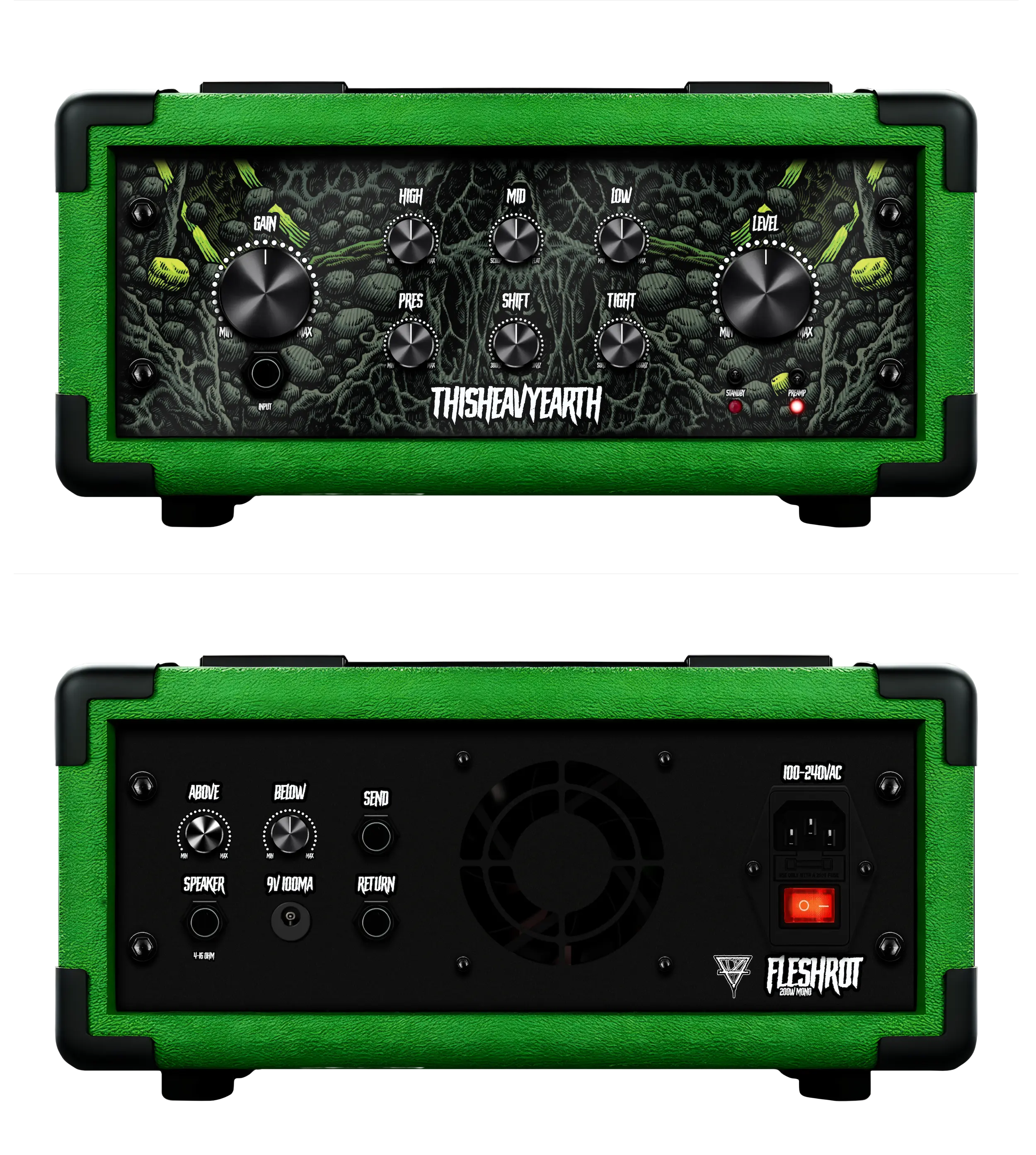
The Fleshrot amplifier section: the centre of the suite's solid-state-inspired high-gain voice.
What the circuit is actually doing
A useful technical description comes from Aion FX's documentation for its VH Drive Channel, an adaptation of the Ampeg VH-140C drive channel. It describes two op-amp clipping stages, a variable bridged-T Ultra Mid filter, and active bass and treble controls after the mid-shaping stage. The same document points to the original unit's 1989 patent, US5032796, titled "Solid state amplifier simulating vacuum tube distortion characteristics."
That combination explains why the amp does not feel like a generic solid-state distortion box. The clipping stages generate the saturated texture, but the mid filter decides how the distorted guitar occupies the spectrum. A strong scoop can create the familiar wide, hollow 1990s impact. Bringing some mids back can make the same architecture speak more clearly in a modern arrangement.
This is also why the VH-140C should not be reduced to the phrase "scooped mids." The scoop is one setting inside a responsive circuit, not the entire identity of the amplifier. The important idea is that the preamp makes a deliberate tonal decision before the cabinet and microphone shape the final sound.
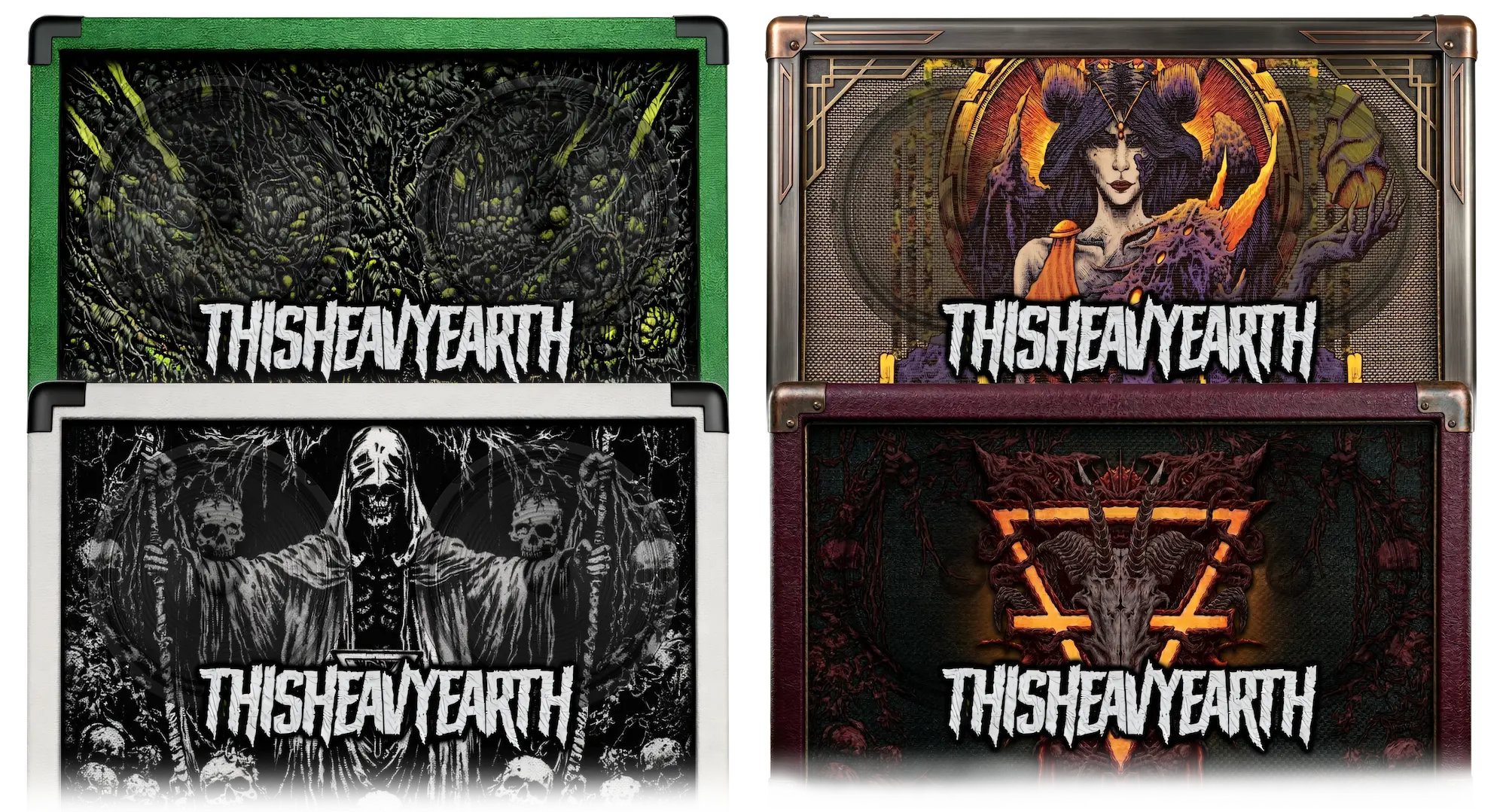
The cabinet stage is not decoration: it is where gain becomes a recordable guitar sound.
Fleshrot: the signal chain matters as much as the amp
Fleshrot comes from the collaboration between This Heavy Earth and Aurora DSP. The official product description presents it as a full chain of boutique-grade death-metal circuits, based on the Fleshrot 200 amp and This Heavy Earth guitar pedals. That framing is important. The software is not only an amplifier window with a few extra knobs around it. It is a place to build the complete front end, amp stage, cabinet response and final mix position.
At the front, Spectral Gate can create clean stops, GRIM3 can tighten the lows before the amp, Crypt Boost can add up to 26 dB of tilt-EQ boost, The Fuzz can introduce a blended op-amp texture, and Crustifiction can push toward crust, black, doom or death-metal distortion. The goal is not to use every block every time. The goal is to make each block answer a different problem.
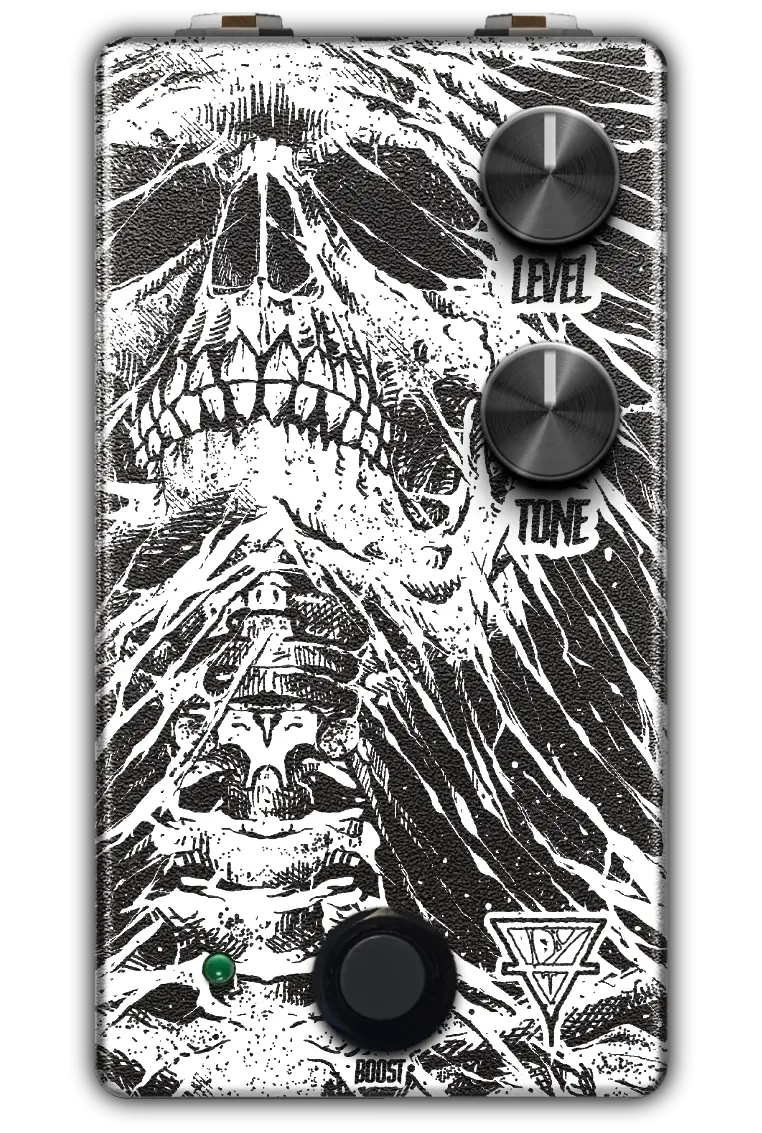
Boost for tension
Use the front-end boost to remove excess bloom and make the first few milliseconds of the note feel more deliberate.
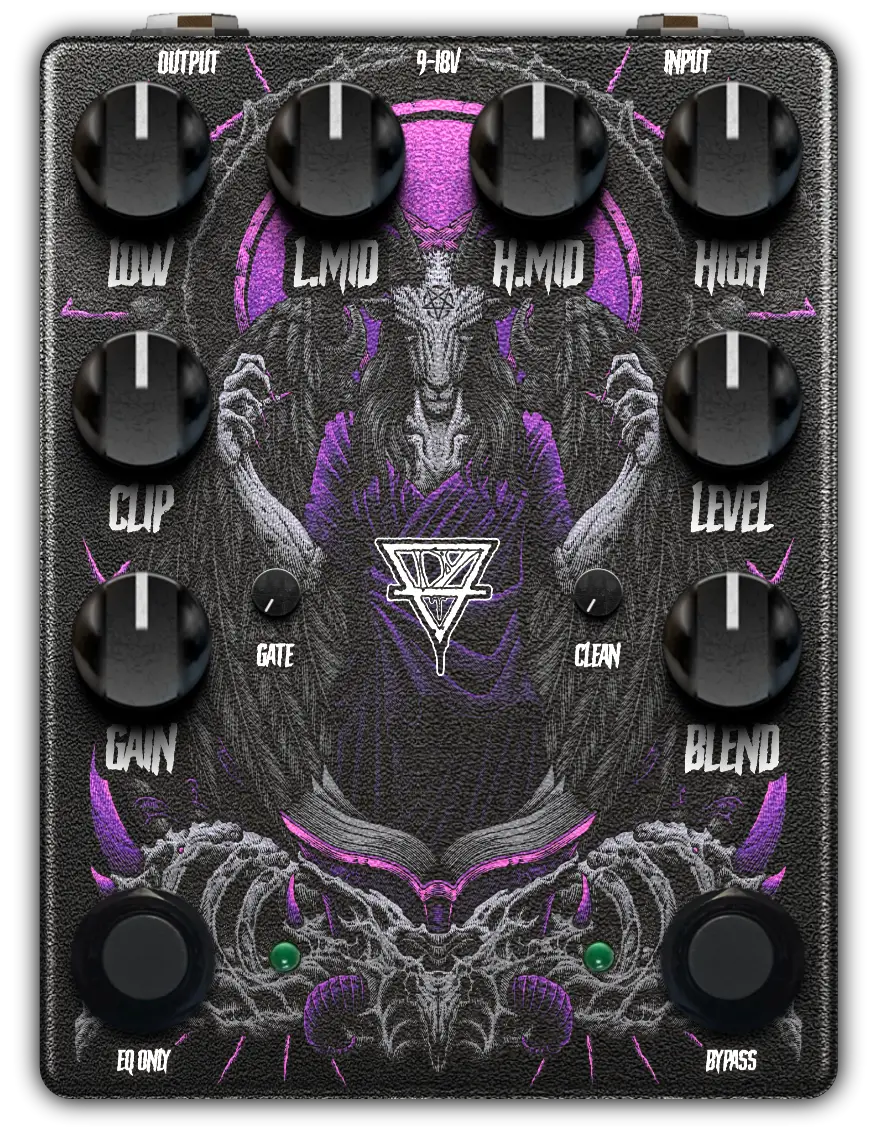
Distortion for texture
Use a separate distortion voice when the riff needs more abrasion, not simply more volume or more amplifier gain.
After the amp, Fleshrot adds cabinet voicings, SpeakerX and Graphic Output EQ. This is the part that turns an exciting soloed distortion into something that can survive a mix. A cabinet or impulse response removes the fizzy, unfinished edge that appears when the preamp is heard without a speaker stage. The final EQ then lets you decide whether the guitar should be broad, dry, bright, dark or pushed toward a particular arrangement.
A practical starting recipe for old-school brutality
There is no universal VH-140C setting, but the following order keeps the decisions musical and repeatable:
- Start with the instrument. Tune accurately, choose strings that hold enough tension for the tuning and make sure the pickup is not driving the input harder than intended. A flabby low string cannot be repaired by a more expensive amp model.
- Gate the silence, not the performance. Put the gate early enough to stop hiss and unwanted string noise, but leave enough release for slides, bends and sustained chords. Death metal precision comes from controlled transitions, not from chopping every note short.
- Use less gain than the soloed sound suggests. High gain can sound impressive alone while removing the small transient details that make a double-tracked riff feel large. Raise the gain until the note holds together, then stop.
- Choose the midrange on purpose. A deep scoop can create the classic hollow punch. More mids can help a single guitar, a busy arrangement or a modern production speak. Neither choice is automatically more authentic.
- Shape the low end before it becomes a mix problem. High-pass or tighten the lowest region only as much as the arrangement needs. The guitar should be heavy, but the bass and kick still need somewhere to live.
- Let the cabinet do real work. Move the virtual mic or choose a different cab voicing before reaching for a dramatic post-EQ. Small changes at the speaker stage can be more natural than large cuts at the end.
- Judge the tone with the drums and bass. A guitar that sounds slightly thin in isolation may be exactly right once the kick, bass distortion and snare are present. The finished record is the instrument.
The old-school sound is an arrangement, not a preset
Extreme-metal guitar tone is often discussed as if it lives inside one amp. In practice it is a chain of compromises. The tuning changes the fundamental range. The string gauge changes attack and pitch stability. The player changes the transient. The gate changes the space between notes. The amp creates the distortion profile. The cabinet and microphone remove what the speaker cannot reproduce. Editing and double-tracking turn a single performance into a stereo image. The bass then fills in, fights or completes the low end.
This is why a tone can be "wrong" in a bedroom and right on a record. A dry, aggressively filtered guitar may sound small by itself, but it leaves room for the low end and makes the rhythm feel faster. A huge guitar with too much sub and too much gain can sound enormous during setup and then flatten the entire mix.
The useful test: mute the guitar for a moment, bring it back at the same level and listen for the riff's attack, not just its distortion. If the palm-muted notes, stops and chord changes become easier to follow, the tone is doing its job.
From the VH-140C idea to a modern production tool
The value of a modern software recreation is not only that it removes the need to find a rare second-hand head. It makes the signal path visible and recallable. You can compare a tight front-end push with a fuzzier one, switch cabinet behaviour without repatching a room, transpose a part without retuning the guitar, and keep the final EQ next to the rest of the chain.
That is where Fleshrot takes the VH-style idea somewhere useful for current production. It keeps the fast, hostile centre of the sound while acknowledging that modern guitar work is often done inside a DAW: with DI editing, multiple tunings, virtual cabinets, automation, headphones, revisions and a mix that has to translate beyond one loud room.
The best result is not a museum copy. It is a tone with the right attitude: a hard edge, a controlled low end, enough mid information to communicate the riff and enough space for everything around it.
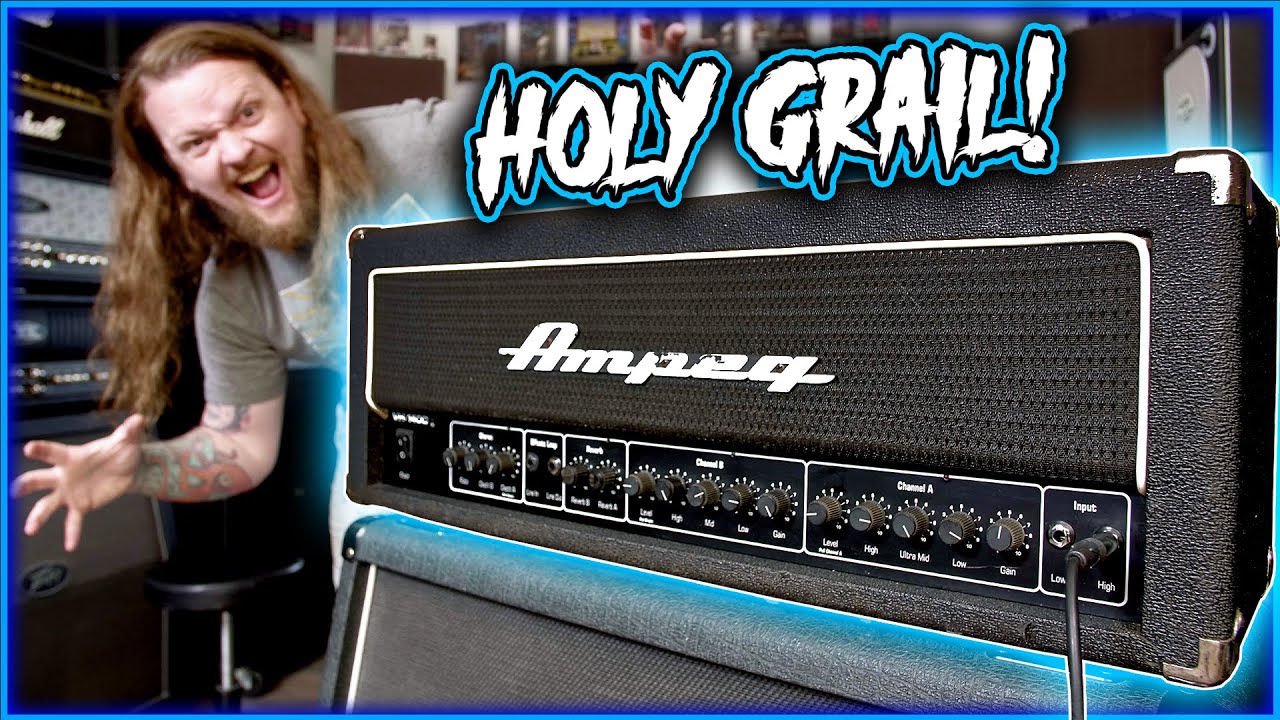
Listening reference: Taylor Danley's hands-on look at the Ampeg VH-140C. Click the image to watch the video.
Further listening and sources
These references informed the article. Product pages are the source of truth for the current Fleshrot feature set and availability; historical amplifier details and band associations should be read as technical or scene context.
- Aurora DSP: This Heavy Earth - Fleshrot Suite - current feature list, signal-chain description and platform information.
- This Heavy Earth: thiSHEAvyearth amps & effects - the boutique hardware collaboration and Fleshrot family context.
- Ampeg: Discontinued products and schematics archive - official confirmation that the VH-140C belongs to Ampeg's archived product history.
- Aion FX: VH Drive Channel documentation - a technical adaptation and explanation of the VH-140C drive channel.
- Patent record: US5032796A - the 1989 solid-state amplifier distortion patent cited by the technical documentation.
- Tape Op: Death & Black Metal Recording Techniques - practical observations on low tunings, tight guitar sounds and avoiding excess low end.
- Sound On Sound: Extreme Metal and Making Modern Metal, Part 2 - recording, midrange and distortion-chain context.
- Guitar World: How Entombed and Sunlight Studios gave birth to death-metal guitar tone - the HM-2 / Swedish chainsaw tradition.
- Listening reference: Taylor Danley: The Most Iconic Old School Death Metal Amp!. This is a creator's opinion and listening reference, not an official Ampeg claim.
Web sources checked September 10, 2026. Product availability, software versions and external pages may change.
Build your own heavy signal chain
Explore Fleshrot Suite and move from a tightened front end to a finished, recordable death-metal guitar sound in one recallable chain.
Explore Fleshrot Suite ->